Rosh Hashanah: In allegiance to the living messiah Shah Raheem al Hussaini Aga Khan V
Rosh Hashanah!
The High Holidays highlight the call for justice, with the shofar acting as a wake-up call. Its echoes resonate with a call for moral & ethical accountability
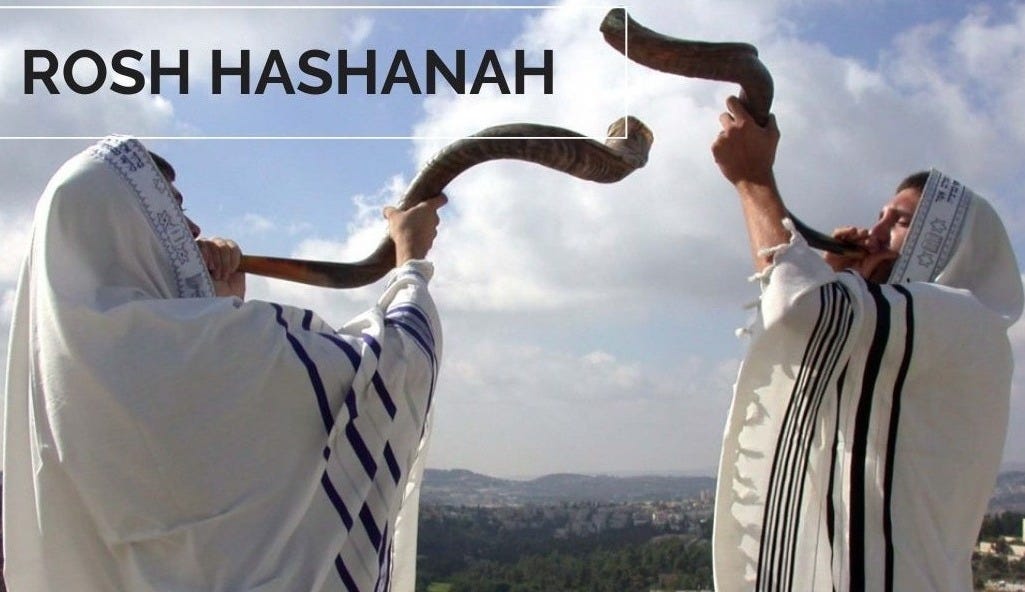
As the days grow shorter and the light fades, may the Lord fill your heart with warmth and a radiant glow.
Happy Rosh Hashanah! Shanah Tovah Umetukah! Sending love and laughter from Allentown, accompanied by the joyful sound of the shofar in celebration.
Wishing you and your family a year overflowing with peace, prosperity, and joy. May your New Year bring good health, happiness, long life, and countless blessings.
Rosh Hashanah, Yom Kippur, and the Days of Awe emphasize the importance of moral responsibility, encouraging repentance and forgiveness.
Tikkun Olam, the principle of repairing the world, encourages action against Netanyahu, an indicted war criminal, and his extremist government's acts of genocide.
Humanity should focus on choosing life over death, as Pikachu Nefesh highlights, stressing that nothing holds greater value than saving a life.
Holocaust and genocide expert Raz Segal described Israel’s actions in Gaza as “a textbook case of genocide.”
More than a thousand scholars, lawyers, and practitioners urged “all relevant UN bodies … and the Office of the Prosecutor of the International Criminal Court to act immediately … to protect the Palestinian population from genocide.”
Recently, Omer Bartov, a renowned historian of Holocaust and genocide studies at Brown University, accused Israel of committing “systematic war crimes, crimes against humanity, and genocidal actions.”
I understand the pain behind this refusal. It forces many Jews to face an unthinkable reality: that we may have become our own worst nightmare.
If we can't face the truth on a day like this, then what’s the purpose of observing Rosh Hashanah or Yom Kippur?
Being hesitant or staying silent on this issue would only disrespect a festival we hold as the holiest time of the year.
On this sacred occasion, let us advocate for ending support to the Israeli military amidst accusations of genocide in Gaza and oppose Zionist supremacy and ethno-nationalism.
The historic H.R. 3565, also known as the Block the Bombs Act, has been introduced in Congress. Since its debut, 46 members have co-sponsored this significant legislation. Encourage your representative to join as a co-sponsor.

How can humanity remain silent and indifferent when faced with the moral implications and accountability of a genocide carried out in the name of the Jewish faith?
Official reports indicate that more than 81,000 Palestinians have lost their lives in Gaza so far, with over 95,000 injured, the majority being women and children. Some estimates claim the final death toll could already be nearing 200,000.
Entire Palestinian families and bloodlines have been wiped out. Large parts of Gaza have become graveyards, with countless bodies buried beneath the rubble of destroyed and bulldozed homes. Entire neighborhoods and regions have been completely erased.
Gaza’s infrastructure and healthcare system are in ruins. The UN reports that a deliberate starvation campaign has caused widespread famine and disease across the Gaza Strip. Polio has emerged, and relief workers face immense challenges delivering vaccines to children amid ongoing bombings and missile attacks.
As Jewish people reflect on the ten days of repentance and forgiveness, they face a world increasingly divided by hatred and conflicts, often linked to the Abrahamic faiths of Judaism, Christianity, and Islam.
Although our spiritual roots trace back to Abraham (Ibrahim), and we share a rich common heritage, it’s troubling how religious leaders are frequently exploited to incite hatred, fuel division, and justify acts of violence.
Embracing our shared heritage is both a moral duty and a powerful act of resistance, standing up and refusing to stay silent against those who seek to weaponize faith.
The three Abrahamic faiths share common roots and mutual aspirations for justice (Tzedek), compassion (Rahmah/Hesed), and peace (Shalom/Salaam).
The three Abrahamic faiths have a lot in common, making the exploration of these shared elements a path toward recognizing the shared humanity and divine purpose that connect the Abrahamic family.
One example is the story of Jonah (Prophet Yunus يونس) and the Whale. During these ten days, the recitation of this haftarah in the synagogue is thought to bring blessings of wealth and encourage individuals toward teshuvah (repentance).
The story of Jonah, a Jewish prophet, describes how he was instructed by God to travel to the non-Jewish city of Nineveh and warn its people to abandon their sinful behavior or face destruction. Instead of obeying, Jonah chose to flee, boarding a ship that soon encountered a violent storm threatening to sink it.
Jonah realized he was responsible for the storm and asked the sailors to throw him overboard. He was swallowed by a huge fish sent by God, where he spent three days praying. In the end, the fish released him onto dry land, alive and well.
In Islam, the story is quite similar, as Prophet Yunus (Jonah) recited this prayer during his three days in the belly of the whale: “There is no deity except You; exalted are You. Indeed, I have been of the wrongdoers.” (Surah Al-Ambiya, Ayat 87)
Happy Rosh Hashanah! Wishing you a year as sweet as honey and as refreshing as a crisp, perfect apple!
We Charge Genocide: This Rosh Hashanah, it's time to confront the carnage by Zionism. By Rabbi Brant Rosen A Must Read!
https://www.peoplesworld.org/article/we-charge-genocide-for-rosh-hashanah-we-must-confront-zionisms-carnage/
Mark your calendar! Check out an intriguing film on wealth inequality by local filmmaker Richard Master. This eye-opening production dives into the societal effects of the nation’s widening wealth gap. How can the world's largest and most prosperous economy still have millions of homeless people and so many without medical insurance?
Dinner will be served at the conclusion. Kindly sign up here to confirm your attendance:
https://www.mobilize.us/lehighcountydemocraticparty/event/838770/

Comments
Post a Comment